Project overview
Design to
physical vehicle.
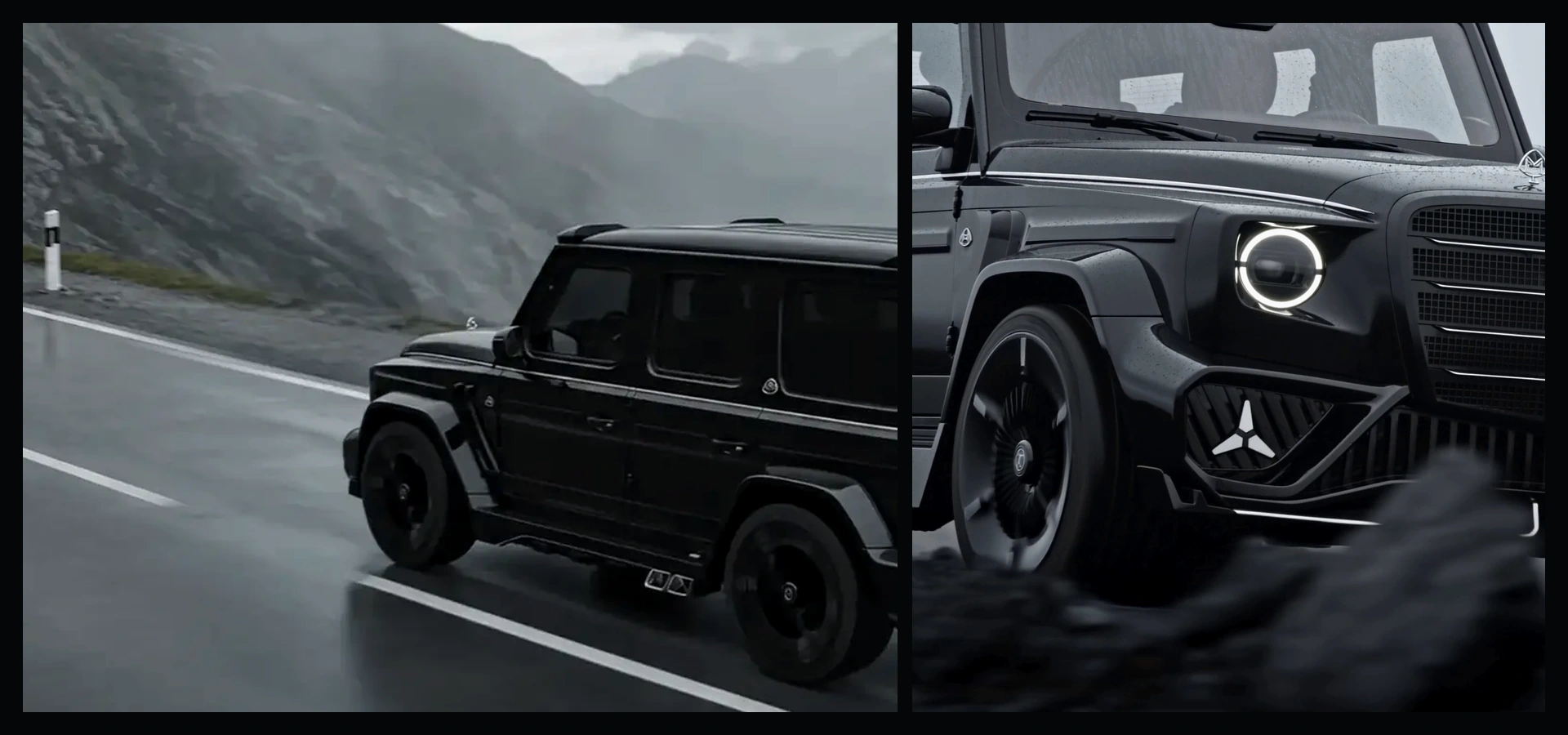
A delivered coachbuilt vehicle documented through road context, controlled geometry, composite production and final panel fit.
- Source
- Documented SAVVINI production evidence
Design DNA
Understand the original before changing it.
The program begins by mapping the G-Class visual logic: its upright stance, clear body hierarchy, strong wheel placement and unmistakable front architecture. Every intervention must strengthen the vehicle without losing the disciplined character that makes it immediately recognisable.
Research & direction
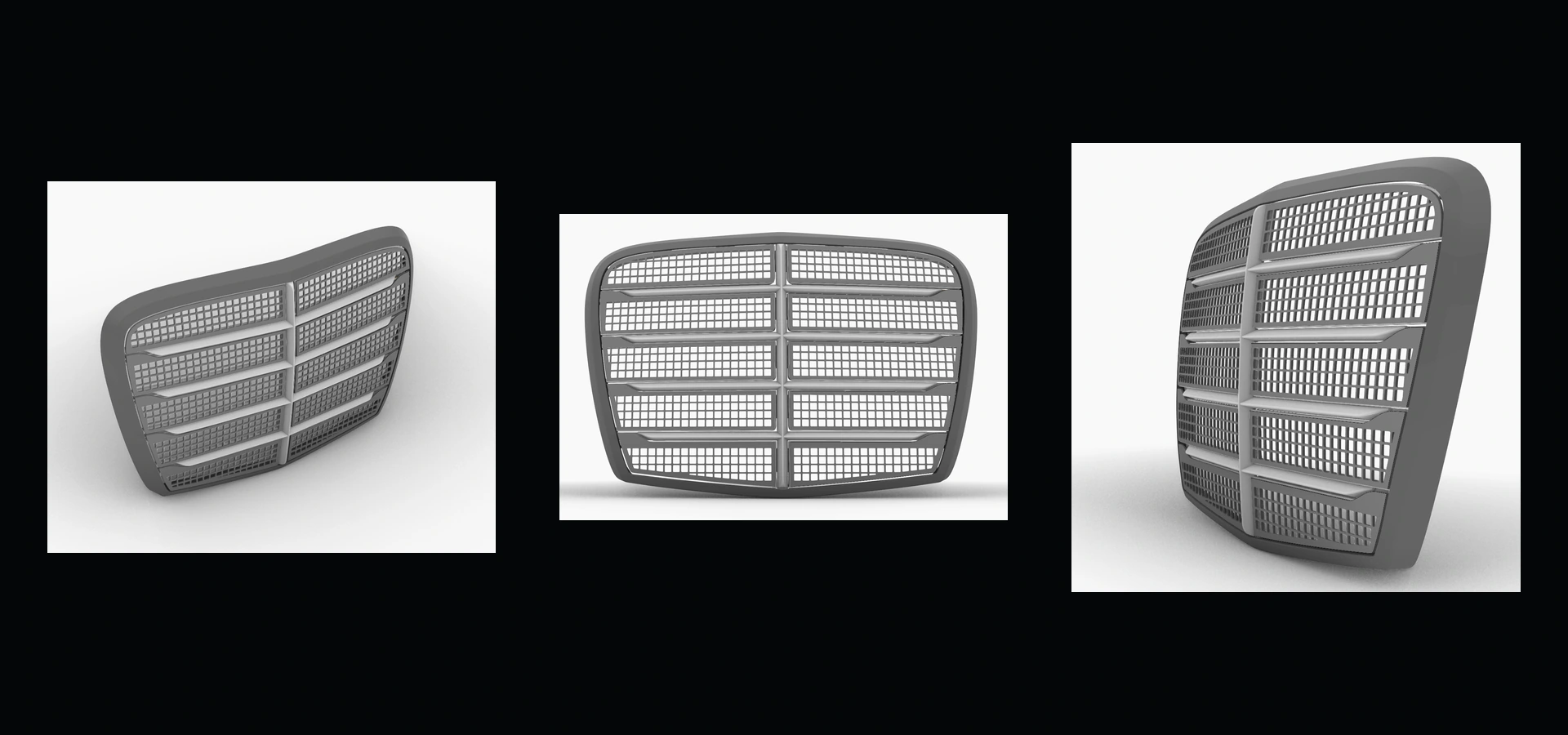
From identity studies to selected front architecture.
Alternative grille volumes, opening patterns, border thicknesses and surface transitions are compared as one design family. The strongest direction is selected only when the new identity feels more focused while remaining credible on the complete vehicle.
Digital development
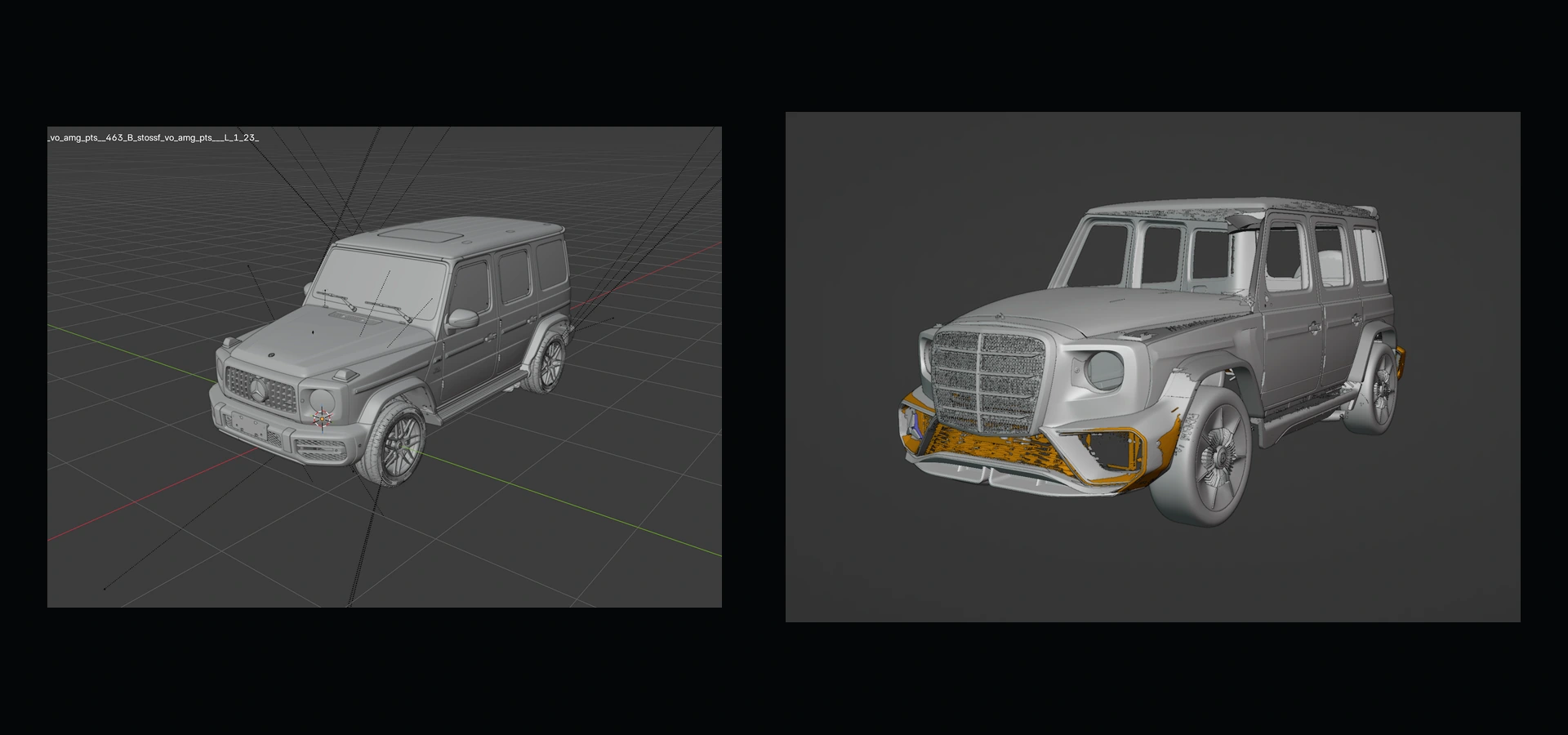
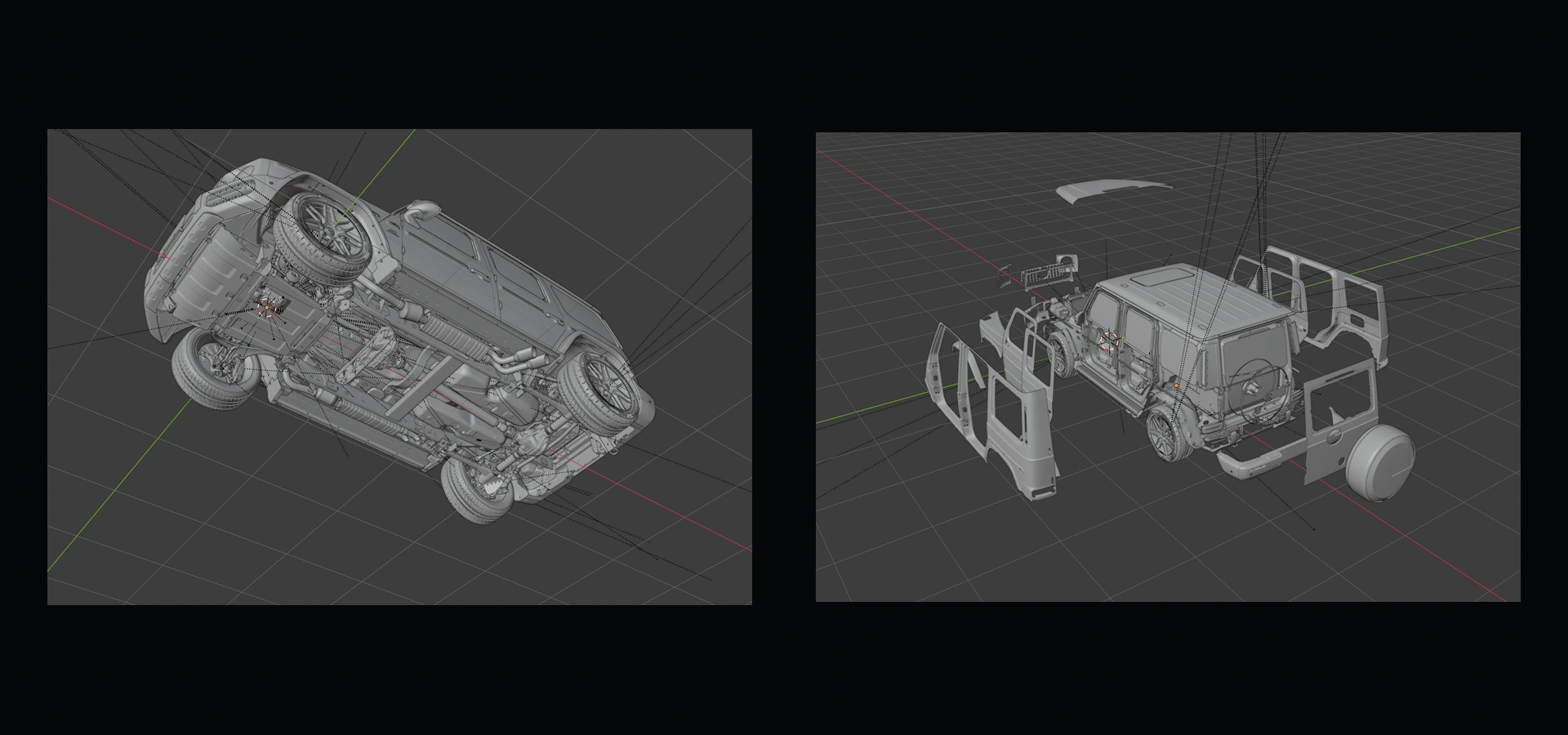
Donor geometry, package and surface control.
The donor vehicle, underbody and complete body package are documented in CAD before the coachbuilt surfaces are released. Controlled digital geometry establishes production-ready boundaries for the new front, arches, side elements and attachment zones.
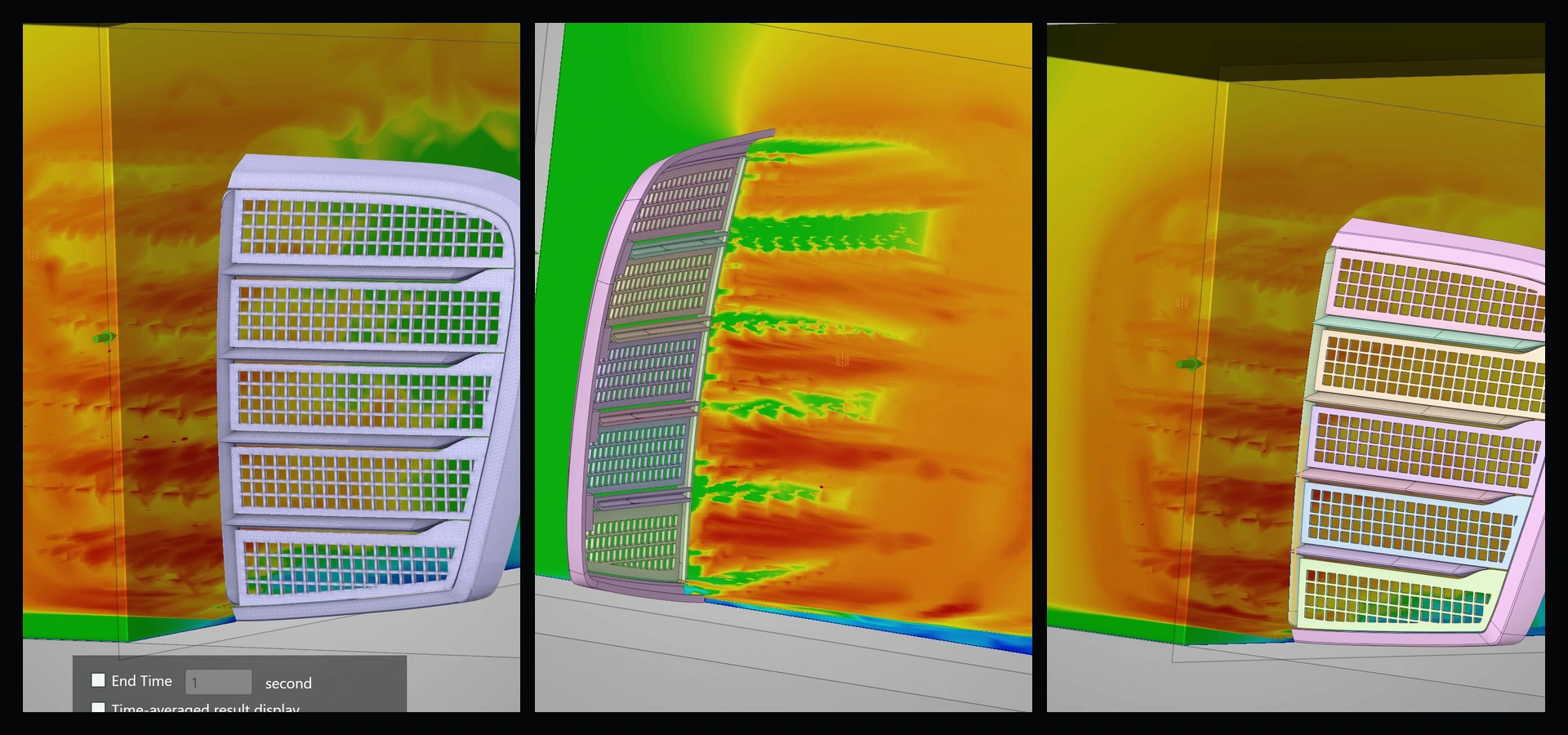
Aerodynamics
Open area, pressure and airflow.
CFD is used to evaluate how air moves through and around the new grille system. Opening area, pressure distribution and downstream flow are checked together so functional performance supports the intended visual character.
Composite body
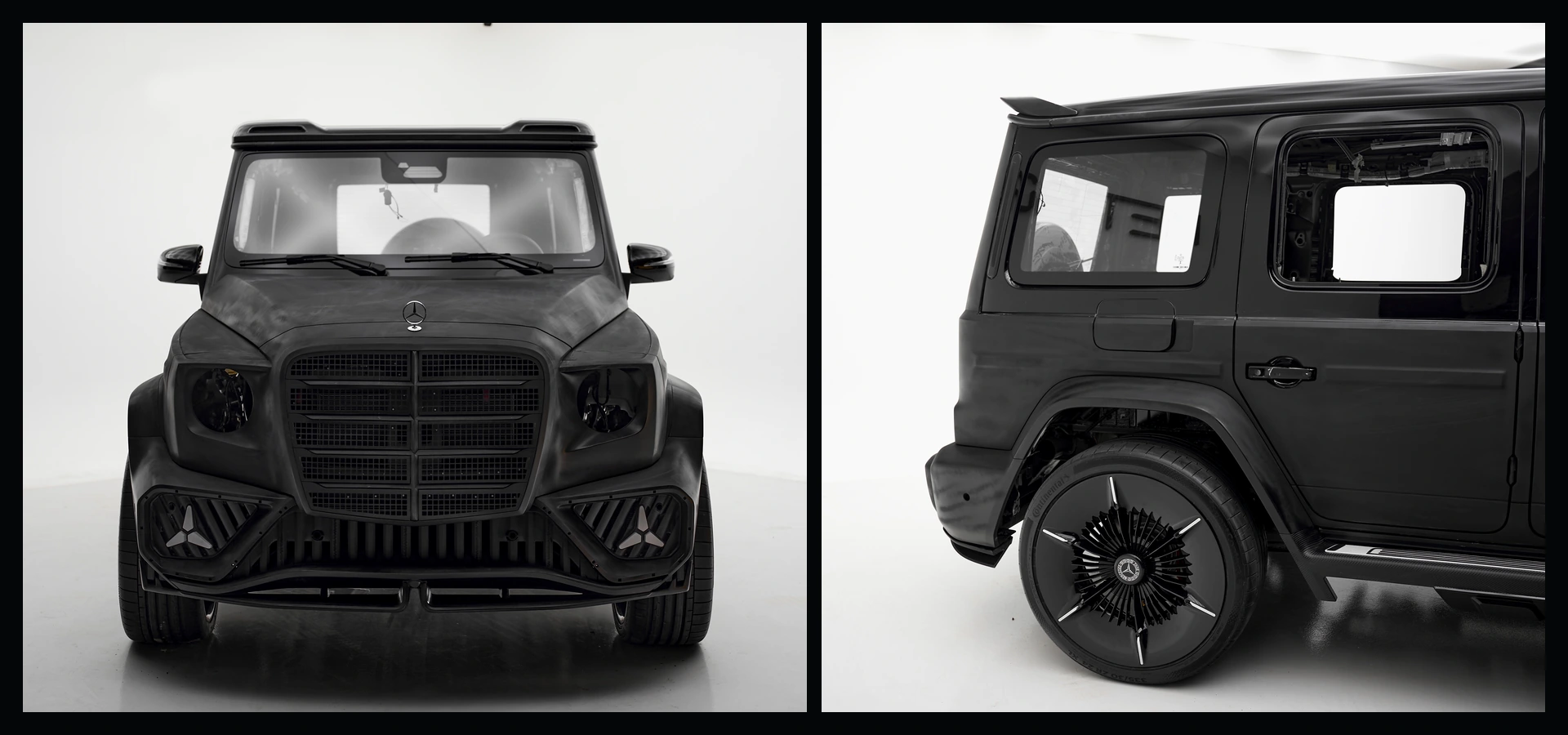
The new body exists physically.
Full-scale body evidence confirms the new front, wheel arches and side surfaces as manufactured components rather than presentation-only geometry. Surface continuity, edge definition and the relationship to the donor structure are evaluated on the real vehicle.
Component engineering
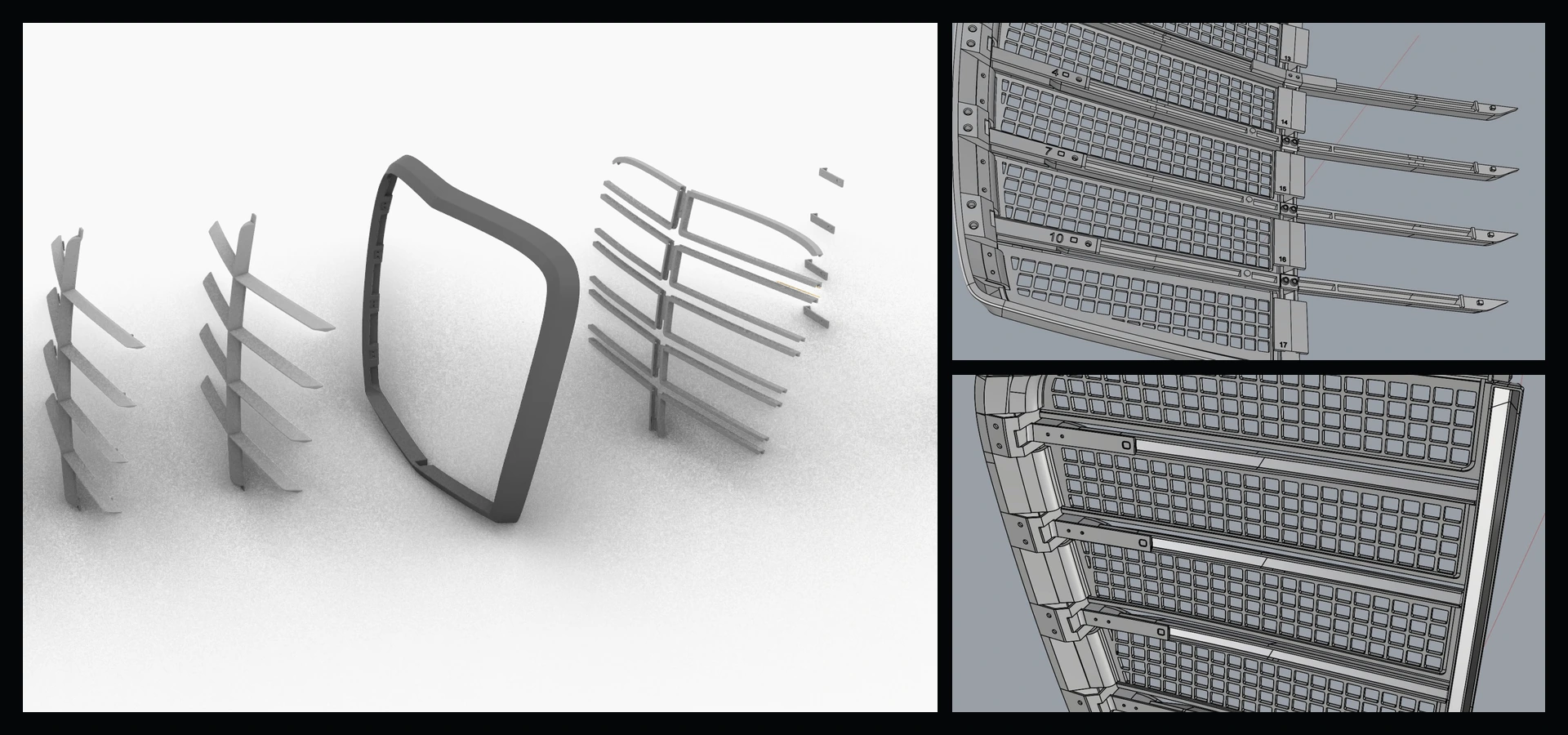
Outer surface, inner support and interfaces.
The grille is resolved as a layered, buildable assembly. Outer geometry, internal rails, support structure, mounting points and repeatable component logic are developed together so the visual surface is supported by credible engineering.
Fit & assembly
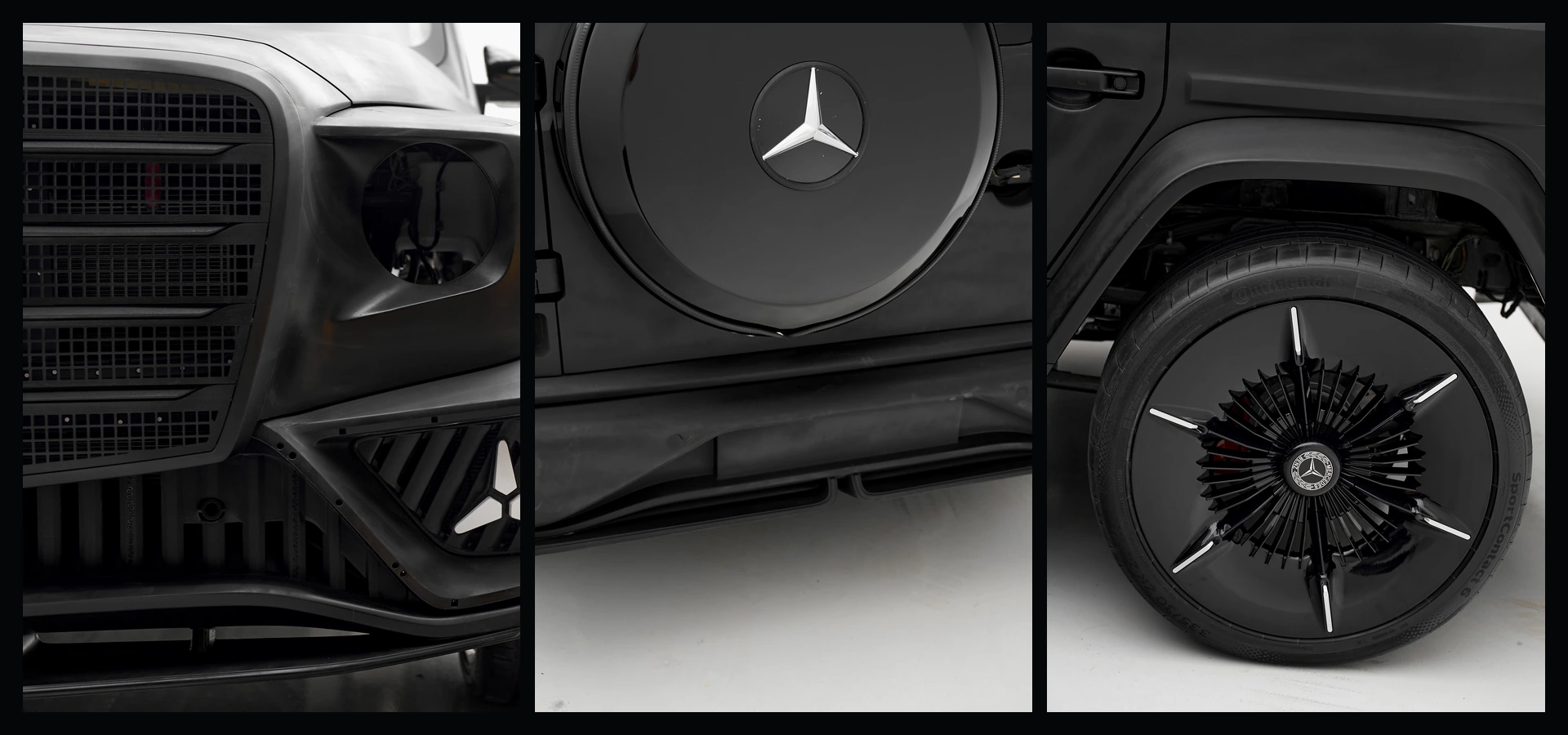
Engineering closes at panel fit.
Front openings, rear interfaces and wheel-arch transitions are checked on the physical vehicle before final finish. Alignment, gaps, clearances and surface continuity turn separate manufactured components into one coherent body.
Final vehicle
One vehicle. Every component.
Body architecture, front identity, aerodynamic logic, composite execution and assembly return to the complete vehicle. One connected program creates a resolved coachbuilt G-Class rather than a collection of unrelated parts.